Tuesday, April 1, 2008

Hot Cross Buns

I was browsing for a Good Friday bread recipe when I came across this one. The moment that blog mentioned Good Friday, then I knew I just had to make this bread.

I did not have a spice mix, so I just used 1/2 teaspoon of nutmeg with 1/2 teaspoon cardamom, and the zest of one lemon and one orange. They made for a very fruity aroma combined with the cinnamon.

This bread is much more dense than previous breads I've made, at least during the kneading process.


I know the recipe calls for a paste to be piped out into crosses on top of the buns. I couldn't care less for tasteless paste, so I omitted that step.
And instead of adding a sweet sugar glaze, I just topped the buns with a mixture of powdered sugar and melted butter that people can peel off if they find it too sweet.
Yes, this bread is as good as that blog claims it to be and I will definitely make this again!

Tuna Macaroni

In the good old 80s, and thanks to the absence of cable tv, Pinoys had absolutely no knowledge how the Italians had their pasta - simple, often meatless, and prepared just before the meal with only a handful of quality ingredients. Or at least that was my impression. After all, with the mention of spaghetti, only one thing came to mind in those days - spaghetti noodles with a sweet Bolognese sauce (ground beef in tomato sauce). Baked macaroni likewise was Bolognese-based, had elbow-shaped pasta and was baked with tons of cheese, and apart from these three things was basically the same as spaghetti.

Pinoys were largely oblivious of pasta puttanesca as well as the seafood-based sauces. Hence, recipes like this tuna macaroni were largely a novelty, especially during Lent. I think it was a good way for manufacturers to advertise products, like tomato sauce and cream that can be used on Lenten seafood dishes apart from the usual caldereta and fruit salad, respectively. Why the mention of advertising? Because recipes like these usually come out as features on broadsheets the week before Lent. In fact, this one was from a newspaper clipping that my aunt pasted on her cooking diary. She used to make it for Lent. Everyone, even myself I suppose, loved it. Keep in mind, this was the time that tomato-based dishes, for them to be special had to have a touch of cream; and the cream-based pasta dishes had to have a hint of tomato. During the pre-Asian Food Channel/ Food Network, this was a really good. This is your typical back-of-the-carton Magnolia Cream or back-of-the-label Del Monte tomato sauce recipe.


My aunt, who by the way is a pious old maid, gave me a copy of this recipe in the hope that it would one day inspire me to be more religious as I would be eating fish instead of meat during Lent. So I took the recipe and inserted it on an old notebook and forgot about it for years. Fastforward 2008, this recipe fell off that old notebook as I was clearing away some of my things. I thought of making it, for old times' sakes, and because I thought that it required ingredients that needed to be disposed from the pantry. I updated the recipe, of course with other stuff from the pantry.

Tuna Macaroni
On a large saute pan, melt 1/2 cup butter. Saute one chopped large onion and one medium carrot until tender. Add in three cloves of chopped garlic and saute until you can smell the garlic.

Add in one can of drained sliced mushrooms, one cup sliced olives (green or balck, whichever you prefer) and two cups of canned (or leftover) tuna (salmon works well, too).

Pour in 1 1/2 cups tomato sauce, one cup cream of mushroom soup and one cup milk. Simmer. Season with salt, pepper and one teaspoon fresh thyme, and a bunch of chopped basil. Turn off the heat and add in one cup of cream. Adjust seasonings.

Toss in one package of cooked macaroni (I used fusili). Arrange in ove-proof dishes and bake until top is browned.

The original recipe calls for two cups to cheese to be incorporated into the sauce, plus another cup for topping. I try not to blaspheme the Italians, so I did not bother adding cheese to my seafood. No one missed it.

Wednesday, March 12, 2008

Cream cake


Armed with leftover sponge cake frome my previous project, I decided to make some cream cake, or whatever you'd call this cake layered with cream/ pudding the the tradition of trifles.

I layered the sponge cake with the cream filling.


I made the cream filling by folding in 2 cups of custard which I made from an instant mix. It is actually used quite a lot in Hong Kong for making desserts, and even breading some meats!

I followed the instructions on the back of the can. While still warm, I mixed in around a tablespoon of butter. After it has cooled completely I folded in one package of cream that has been whipped. Lastly, I added some diced mangoes.


It is best to refrigerate this overnight so the cream will set. It doesn't tolerate heat well.

This dessert is really quick and simple, and you can fold in whatever fruit you like. The cream and sponge are both very light and airy.

Monday, March 10, 2008

Cheesecake with sponge crust


They say there are only three general types of cheesecake - New York style, Italian and Japanese. (Yes, I agree that frozen or no-bake cheesecakes are mere flans!) New York style is dense and rich and relies on industrial amounts of creamcheese, with the traditional Graham cracker crust. Italian uses mascarpone. Japanese, on the other hand is more like sponge cake, but made with creamcheese. Others contest that there are more.

So when I recently bought some European creamcheese (which for some reason I thought was Danish) at the supermarket (the usual brands were out of stock), I was rather intrigued on reading a cheesecake recipe calling for a sponge cake crust! (I later googled "danish cheesecake and it seems that the Danes use either bread for cheesecake crusts!)

Further, on opening the package at home, this French creamcheese was a bit less watery than the American brand, and less sour, too. It was sold in boxes of 200g as opposed to 225g (American).

The recipe called for only one creamcheese to I thought it was worth a try.

Kiri Chef (brand) Baked Cheesecake

Line springform pan (18cm) with parchment paper. Preheat oven 325*F.


Line the bottom of the pan with a 1cm-thick sponge cake. (I baked the sponge cake in the same pan the day before. I used a simple sponge cake recipe - more like lady fingers instead of the traditional sponge cake.)


In a bowl, cream 200g creamcheese with 70g icing sugar and the zest of one lemon (I used orange). Add in 150g sour cream, 2 eggs, 20g cornstarch, 150g cream, and 10g lemon juice (I used orange as well) mixing well after each addition.

Pour the mixture into the prepared tin and bake for 60 minutes.


After baking for an hour, the cake comes out puffy. Let cool completely on the pan set on a rack. Chill before unmoulding.


I put the cheesecake in the refrigerator overnight to allow it to completely set, before I unmoulded and sliced it. It developed a crack while cooling. This is normal for cheesecakes.


Variation: you may add 30g dried raisings soaked in rum and 30g toasted pine nuts into the batter.

The sponge I used was rather dry (expected as it was designed for making trifles), but had become moist as it steamed during baking. The cheesecake layer was creamy and rich. It was not as dense as the New York style, but was a bit softer. I quite like it as the cheese layer was a melt-in-the-mouth experience!

Sunday, March 9, 2008

Pear Upside-Down Cake

What to do with a stash of ripe fruits? Make cakes... upside down cake!

I had a stash of D'Anjou pears in my refrigerator, and they were already quite ripe. I have been having these pears for several straight weeks since they first appeared in the local market. So I had to use them, rather than let them go bad. I am not tired of these pears, I'm just salivating at the sight of Philippine mangoes (carabao mango) I haven't had for weeks. Believe me, I am as much a fan of Red D'Anjou pears as much as I am of Philippine mangoes.

I first came across these red pears during my stay in Munich (2006). I used to have them everyday for breakfast. They were sweet, juicy and somewhat soft compared to the Japanese and Korean pears. Above all, it had a perfumy quality - the smell and taste of this pear was quite strong compared to the Asian pears. It's aroma rivalled that of a musk melon (in intesity, not the actualy scent). It was like none I've eaten before! I first bought a few, then bought kilos after I've tasted them. I never found out the name while in Germany as the storekeeper near my apartment never spoke English. I had to search for it on the internet. So it was indeed a blessing when these appeared in the local supermarkets.

So off I googled and searched for a pear cake recipe and what came out were upside-down cake recipes. I adapted the one I got from marthastewart.com.

The upside-down cake I grew up eating were the pineapple ones my grandmother always bought from Princess Delan's, or those she made herself. That bakeshop was a small store in our town, and sad to say it closed down already (unless they relocated). The pineapples they used were tart, but was bathed in an overly sweet dark brown syrup, and accented with some cinnamon. The sweet and sour flavors cancelled each other, but it was an explosion of flavors, nonetheless. How can a kid not like that? Its cake base was, like most commercially-made cakes, was light, fluffy but rather dry. The syrup was supposed to help. The cake bought from the store wasn't the best, at least for me (and I know many will disagree), but it was a fun and interesting cake and definitely better than any birthday cake from any party, even my own.

Since I didn't have pineapple on hand (and I'm not a big fan of the fruit anyway - unless eaten fresh in its purest form), I decided to use the stash of pears ripening in the ref, and this cake, I thought, was one of the best ways to use them.

I thought the vanilla in the batter wasn't the most appropriate flavoring as it might come in conflict with the perfuminess of the pears. Instead, I added the grated zest of one lemon plus one teaspoon of finely grated fresh ginger. I thought of adding ginger since some recipes I came across added dried ginger and molasses. I'm not a fan of molasses, so I never gave those recipes a second thought. Ginger, especially when fresh accents the freshness of the fruits and actually complements the lemon flavor. I always use fresh instead of dried as the latter sometimes tastes "off."
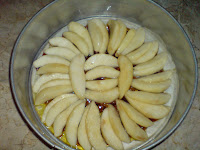


Following the recipe, I arranged the pear slices on the bottom of a pan with the topping. By the way, I tossed the sweet pears with the juice of a lemon prior to arranging them. What better way to use the zested fruit than trowing it away?


The batter, even after folding in the whites was rather thick and dense. I was really concerned, but the cake came out soft and moist. Not as fluffy as a sponge cake, but moist and crumbly enough to require a fork when eating it.

I quite like this cake, and would definitely make this again, with pears or other fruit. It is good served warm or cold. Perhaps, when I need a break from my mangoes, then I will try and make a Mango Upside-down cake!

Friday, March 7, 2008

Stewed Beef, Chinese Style


I am actually not a big fan of beef, no matter how lean it is. It has a very strong flavor and is quite rich. I don't mind beef every now and then, but I definitely can't have it everyday.


It's been a while since I last had beef when I came across this Oxtail Stew recipe. With the anise seeds and soy sauce, I thought it was similar to the braised beef that the Chinese often make and use for noodles. So I modified the recipe a bit and made a batch using beef short ribs. I boiled the beef until it was extremely tender and even the cartilage (not only the tendons) were all soft and falling off the bone. The dish was quite rich (because of gelatin-steeped sauce from the beef) but the seasonings made for a refreshing flavor that cut through the richness of the meat.


I saved the leftovers and used them for topping some beef-flavored noodles. If I still had any more leftovers, I would have added them to vegetable stir-frys, but they were all gone the following day!


To make the braised beef, I followed the recipe for braised oxtail, but substituted the cloves with one dried tangerine peela and one cinnamon stick. These two added a pungent fruity flavor to the dish. Also, I pan-fried the short ribs until brown instead of browning them in the oven. I did this for no reason at all except that I was in a bit of a hurry to finish browning the meat.

Wednesday, March 5, 2008

More Chocolate Cookies!

Having successfully made Martha Stewart's chekerboard cookies, I was inspired to experiment with more of her cookie recipes from her site. So I was basically making cookies for the whole month of December - another batch as soon as the previous had been completely devoured.


I came upon this recipe for Mocha Slice cookies. The technique was simple. It was a dough cookie, so it was similar the the checkerboard cookies I made. However, I did not have cocoa nibs, so I used some toasted walnuts instead.

I skipped rolling the cookies in sugar.


Then I simply could not resist making a cookie with the classic combination of dark chocolate and mint. The original recipe was reminiscent of after-dinner mints. But I could not resist being generous with the filling.
I added pepermint oil to both the dough and filling, by the way
to offset the bitterness of the dark chocolate (instead of sweetening the filling.)